In practice today – are fleets prepared ahead of the winter season, or still reacting once problems appear?
It depends. Some companies plan ahead – they schedule service, maintain their machines, and work consistently with the same technicians. That brings reliability.
Others postpone service. Machines stand idle, so they assume everything is fine. But without regular maintenance, problems only become visible once the winter season starts.
So the same patterns repeat every year?
Very often. As soon as the first snowfall comes, service suddenly becomes urgent – because something isn’t working.
What separates well-prepared fleets from those operating day by day?
Condition of equipment – and peace of mind. Prepared fleets run without surprises. Without preparation, small issues appear quickly and escalate under winter conditions.
If everyone knows service matters, why does it still break down?
Budget pressure and the assumption that “it will probably be fine.” Also, a lack of awareness of how quickly minor issues can turn into serious failures.
What are the most common maintenance mistakes?
Skipping inspections and postponing small repairs. Another issue is unprofessional modifications – bypassing systems or sensors.
Modern machines are complex. Without proper knowledge and parts, small interventions can create major damage.
What tends to be ignored until it fails?
Wear, looseness, early-stage faults – things that seem minor. But together, they can stop a machine completely.
Can you give an example of a small issue turning into a major cost?
A machine had unchecked engine mounting components. A minor issue. Over time, vibrations caused damage to the hydraulic pump and other parts. The repair cost was many times higher than the original fix would have been.
When should preparation for the winter season begin?
Ideally right after the previous winter season ends. That’s the time for inspection, repair, and maintenance. In reality, preparation starts long before the first snowfall.
What does proper preparation actually involve?
A full technical assessment, followed by restoring the machine to optimal condition.
Before the winter season, key steps include:
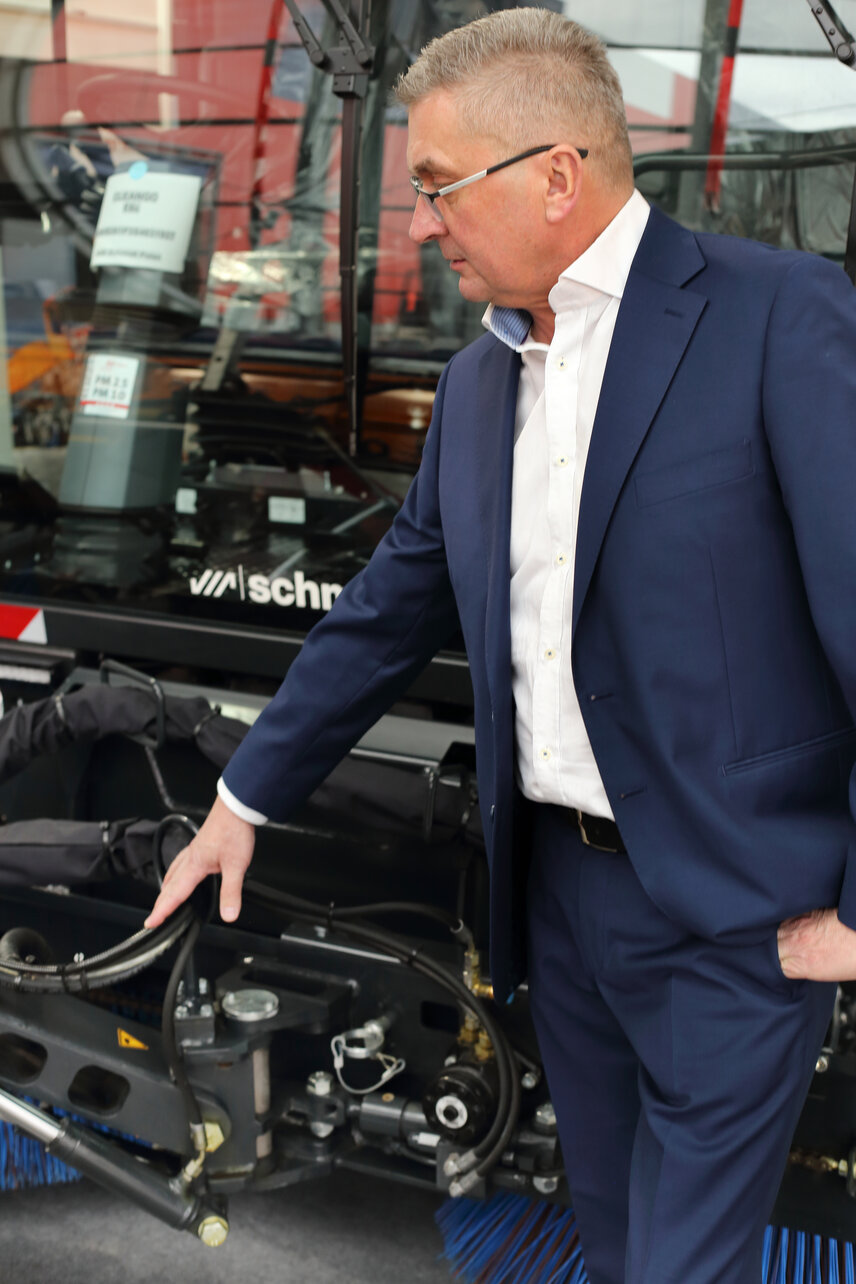
- Checking hydraulics and mechanical systems
- Calibrating spreading equipment
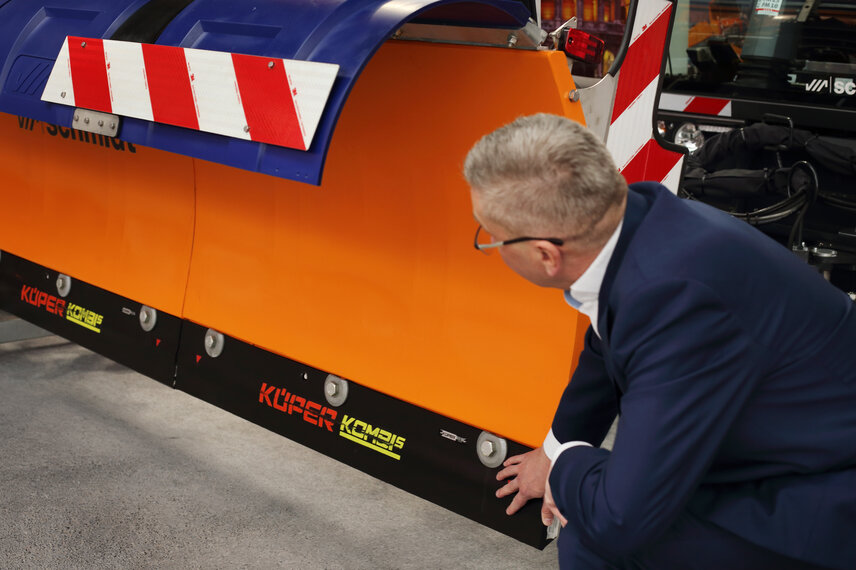
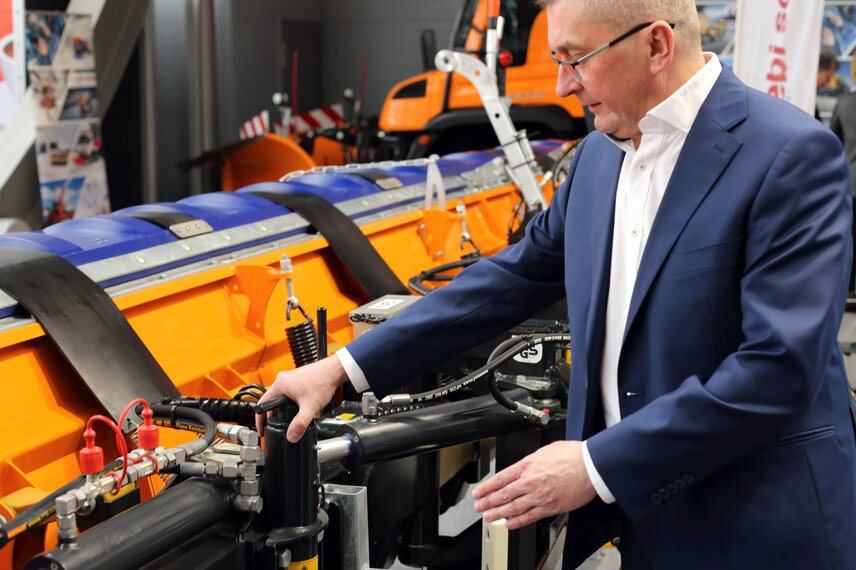
- Inspecting plows and safety mechanisms
- Verifying full functionality
For sweepers, preparation focuses more on working systems, hydraulics, and wear parts.
It’s not a single task – it’s a process.
If budgets are tight, what’s the absolute minimum?
Safety and basic functionality. The machine must operate correctly and safely. That means: hydraulics, key components, hoses, and essential calibration. Some things cannot be postponed.
How much does parts availability affect operations during the winter season?
A lot. The issue isn’t availability – it’s timing. Everyone needs parts at the same moment during peak winter season.
Late preparation often means waiting times. And in winter service, every day of downtime matters.
What should always be checked in advance – even if everything seems fine?
Key wear components and systems under load:
- Hydraulics and hoses
- Sensors and feeding systems
- Spreader mechanisms
- Plow scraping elements and safety systems
- Sweeper brushes and working units
These parts wear naturally. Waiting for failure is the most expensive option.
Where does fleet management most often fall short?
Cost pressure, lack of time, and sometimes insufficient operator training. These machines are robust, but they require proper handling and knowledge.
What does a typical failure scenario during the winter season look like?
No preparation, no inspection. The winter season starts, and problems appear immediately. Machines fail, performance drops, and pressure increases – operational, contractual, and safety-related.
What is most critical during the winter season?
Time. Everything happens at once, and resources are limited. Even if you want to react quickly, it’s not always possible.
How do planned service costs compare to in-season failures?
The difference is significant. Regular inspections are relatively low-cost. Major failures, on the other hand, can take machines out of operation and create much higher costs – including downtime.
When does working with a service partner really pay off?
When it’s part of a long-term approach, not a one-time fix.
Regularly serviced machines last longer, perform better, and retain value.
How can you recognize a well-managed fleet?
Service happens outside the winter season – not during it.
If everything runs smoothly in winter, it usually means the work was done earlier.
One key factor that makes the biggest difference?
A proactive approach to service – combined with well-trained operators.
And looking ahead – what patterns will continue?
Some companies will still postpone decisions.
But there is a clear shift: more are starting to see service as part of their strategy, not just a cost.
That’s what ultimately improves performance in the winter season.
Jacek Szczepański has been associated with Aebi Schmidt Polska for more than 20 years. He joined the company on February 1, 2000, as its first design engineer and, as the business expanded, went on to build and lead the company’s engineering and technology departments. For nearly 12 years, he has been responsible for After Sales Service, working closely with municipal and road maintenance fleets to ensure equipment performs reliably in real operating conditions. He combines extensive operational experience with a strong technical background, holding a degree in Mechanical Engineering and certification as an International Welding Engineer from the Welding Institute in Gliwice.