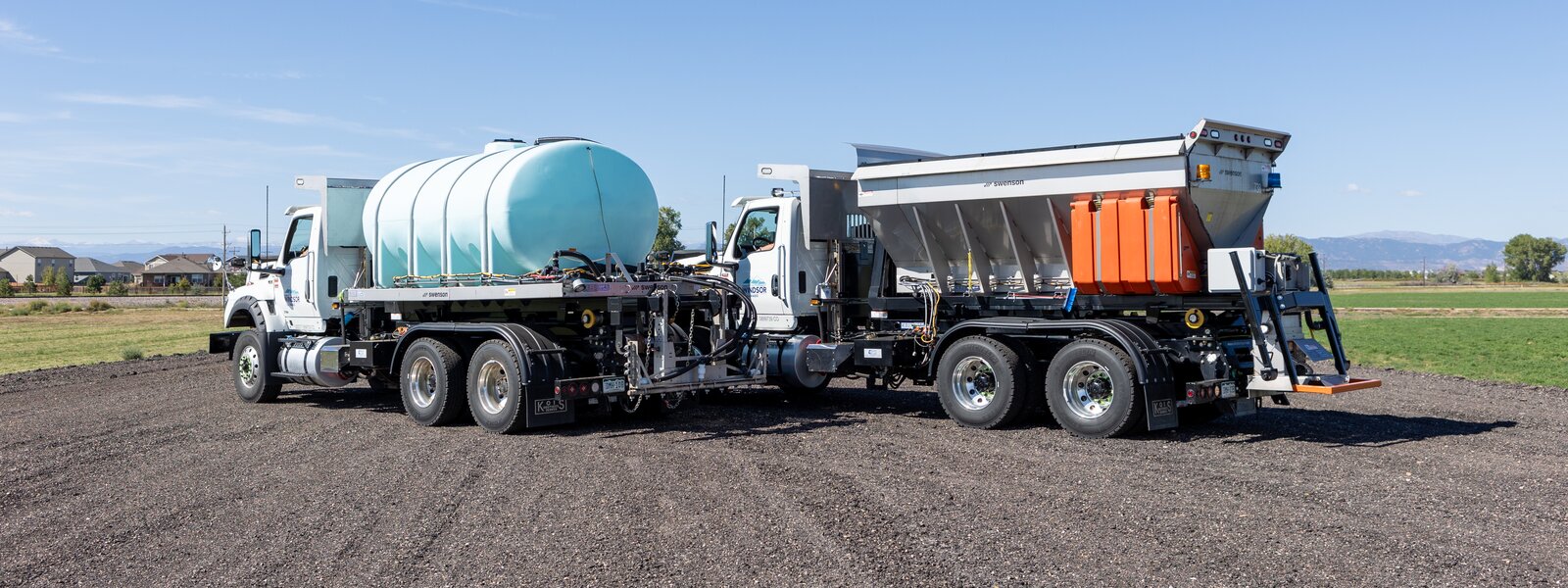
Apply Strategically: Matching Storm to Strategy
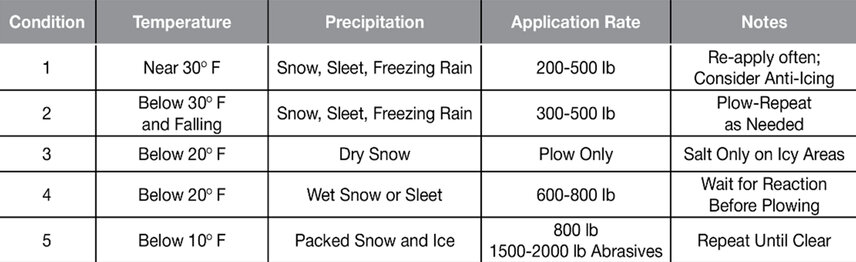
Different storms call for different responses. Application rates vary by temperature, precipitation type, and pavement conditions.
Know Your Snow
From wet, heavy snow to dry, powdery drifts, each storm behaves differently. Train crews to recognize and adapt quickly. Use weather data to determine when to plow, when to salt, and when to hold back.
Typical Application Rates (Salt per 2-Lane Mile)
Timing is Everything
- Pre-Treat: Apply liquids before the storm to prevent bonding.
- Plow and Treat: During heavy snow, plow first, then reapply salt as needed.
- Final Pass: A properly timed last application helps pavement «freeze dry,» leaving a clear, dry surface.

Embrace Technology
Modern snow and ice removal is powered by data. Familiarize yourself with the technology available to make snow and ice removal safe and efficient:
- RWIS (Road Weather Information Systems): Real-time Road and pavement temperature monitoring.
- Infrared Sensors: Truck-mounted or handheld sensors for quick surface checks.
- 511 Systems: Real-time Road and weather condition updates for many states.
- Private Forecasting Services: Localized predictions for more precise crew deployment.
- Innovative Equipment: Invest in equipment with smart technology for material placement and waste minimization.
Environmental and Safety Practices
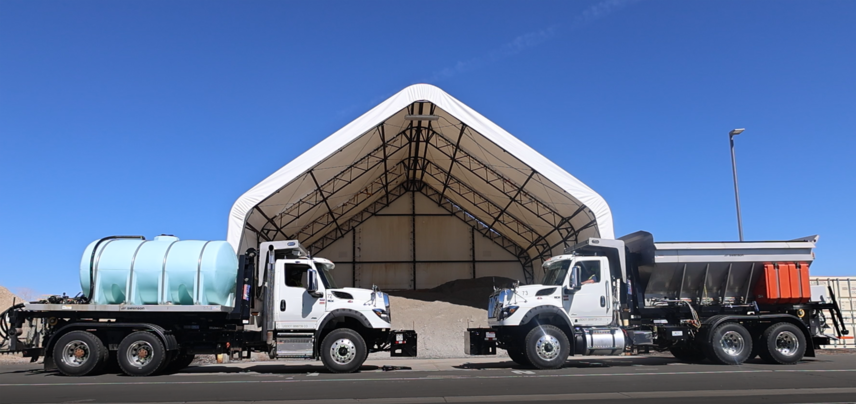
- Cover Salt Stockpiles: Prevent runoff and contamination.
- Use Impermeable Pads: Ensure proper drainage at storage sites.
- Train Crews Regularly: Reinforce correct spreading rates, handling, and safety around high-traffic areas.
- Calibrate your Equipment: Maximize performance and minimize waste
Smart planning and precise application make every ton of material go further reducing waste and efficiency.
Whether you’re maintaining highways, municipal routes, or private facilities, the right strategy keeps your operation efficient and your community safe.